The Mask That Eats the Self: Why 'Us' Breaks Its Own Rules on Purpose
Jordan Peele's Us prioritizes metaphor over logic. A deep dive into masks, identity, and why broken narratives can be better than clean ones.
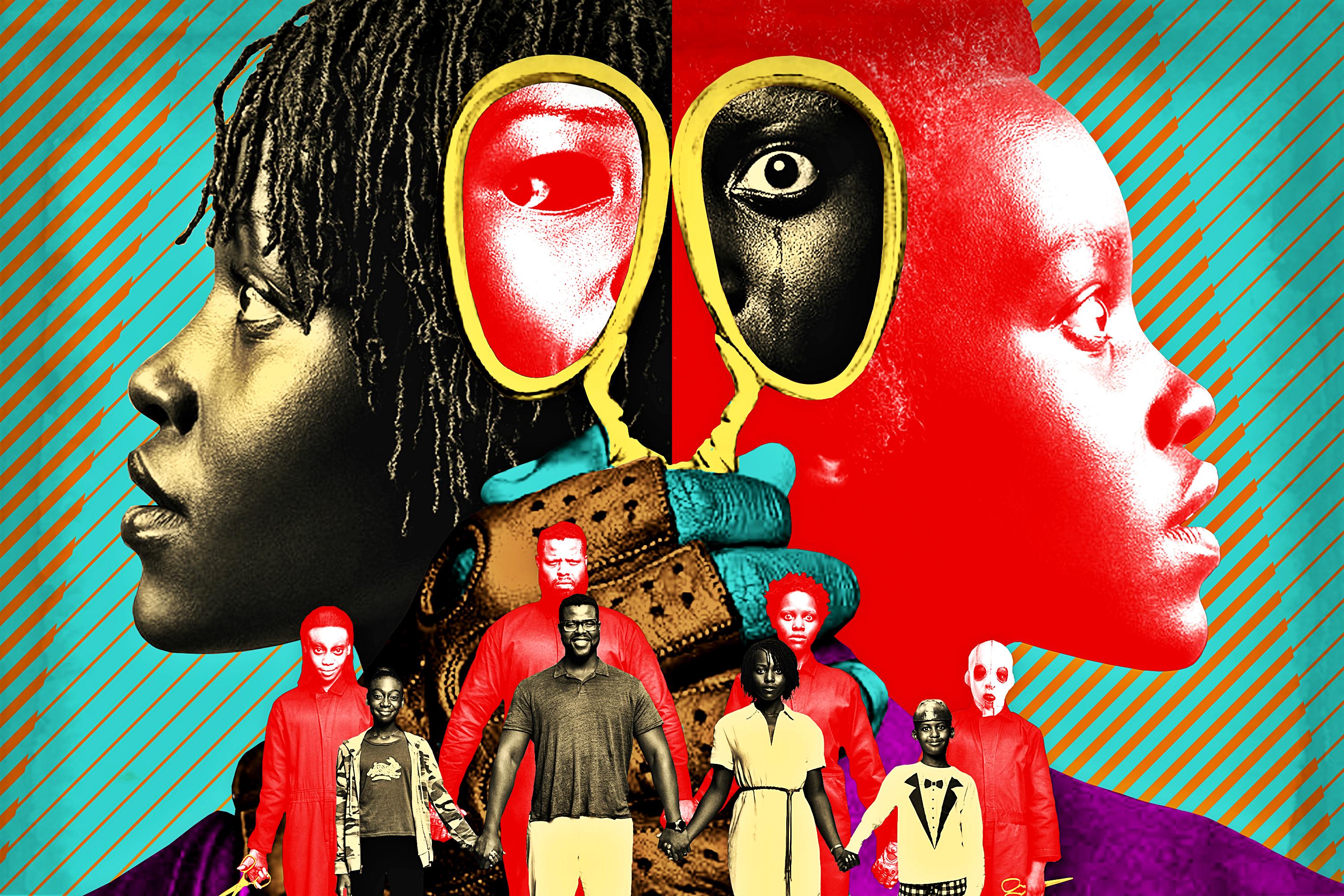
We've all been there. You finish a movie, impressed by its ambition, but one question nags: "That doesn't make any sense."
For many viewers, Jordan Peele's Us is that movie.
The Twist That Breaks
It ends with a strange, ironic twist: the protagonist we rooted for is actually the clone. The voiceless villain is the original human. Shocking. And yet, the logic crumbles on inspection.
The Unanswered Questions
If the Tethered clones couldn't talk, how did young Adelaide (the imposter) master human speech, while the original human girl (Red) lost the ability entirely? Why didn't Red simply escape the tunnels after the childhood swap? Why would she spend decades underground when the other Tethered were not literal prisoners?
These are plot holes. But what if the broken logic is the entire point?
Narrative Over Logic: A Visual Culture Choice
Us belongs to a branch of modern visual culture where mood, metaphor, and emotional impact override literal cause-and-effect.
The Oblivion Comparison
Consider Oblivion (2013). That film has gaping inconsistencies — clone logistics, memory wipes, the Tet's strategy, a timeline that collapses under scrutiny (how can clones live on Earth for years before the original Jack and Julia's escape pod even lands?). But you're not meant to calculate. You're meant to feel: the haunting beauty of a ruined Earth, the ache of discovering your own replacement.
Peele's Intent
Us does the same. Peele isn't building a consistent universe. He's constructing a poem about duality, privilege, and the horror of the stolen self.
| Literal Question | Thematic Answer |
|---|---|
| How did the clone learn to speak? | The mask learns by watching. The original loses her voice because trauma silences. |
| Why didn't Red escape the tunnels? | She is not a character in a documentary. She is a symbol — the buried truth that never gets unearthed. |
| Why do the Tethered rise on July 4th? | Because judgment comes on the birthday of the nation that abandoned them. |
The Mask as a Semiotic Key
The wolf mask worn by the son, Jason, unlocks the entire film.
What the Mask Reveals
-
Jason's mask mirrors his mother's metaphorical mask. She has pretended to be the original Adelaide her entire life.
-
The final shot — Jason staring at his mother in the rearview mirror while wearing the mask — suggests he knows something is wrong. He sees another mask-wearer.
-
Semiotic shift: Early on, Jason wears the mask for play. By the end, he wears it for protection. A survival tactic learned from his imposter mother.
The Mask's True Function
The mask does not hide the real person. It erases them.
| Character | Mask | What remains |
|---|---|---|
| Adelaide (imposter) | "Real daughter, wife, mother" | Nothing. The performance became the person. |
| Red (real Adelaide) | None | Raw, authentic, broken — and killed for it. |
| Jason | Wolf mask | A child learning that masks are necessary to survive. |
The Strange Theme: We All Wear Masks
This is where Us becomes genuinely unsettling: the mask doesn't hide the real person. It erases them.
Adelaide (The Imposter)
She started wearing the mask of "real daughter, real wife, real mother" to survive. Decades later, nothing remains underneath. The performance became the person. She loves her son because he also wears a mask — a kindred spirit.
Red (The Real Adelaide)
She never learned to mask. She remained raw, authentic, and utterly broken. But in a world of performances, authenticity isn't salvation — it's a death sentence. She is the "real" one, yet feels like the fake.
Jason (The Son)
He accepts the fake mother because the fake is the only mother he's ever known. He loves the mask, not the broken original. The film asks:* Is that so different from how any of us love?*
The Antagonists Are Americans
The most chilling line in the film arrives after a home invasion:
"Who are you, people?"
"We're Americans."
Breaking Hollywood Tropes
In any other Hollywood film, the answer would be "monsters" or "criminals" or "terrorists." Here, the answer is domestic. The threat is not foreign. It is the shadow America casts underground.
| Traditional Hollywood | Us |
|---|---|
| Antagonist = foreign threat | Antagonist = domestic |
| Antagonist = different race, religion, ideology | Antagonist = same face, same country |
| Antagonist = enemy to defeat | Antagonist = mirror to confront |
| Victory = America saved | Victory = America exposed |
The Ceremony of Violence
The Tethered do not apologize. They do not negotiate. They rise on the Fourth of July in matching red jumpsuits, carrying scissors, moving in unison. That is not chaos. That is ceremony. That is ritual. That is pride.
Red says: "We're Americans" — not as a plea, but as a declaration of war. The horror is not that they are lying. The horror is that they are right.
Jeremiah 11:11 — Judgment, Not Attack
Red quotes scripture before the uprising:
"Therefore thus says the Lord: Behold, I am about to bring on them a disaster they cannot escape. Though they cry out to me, I will not listen to them." (Jeremiah 11:11)
Biblical Context
In the Bible, God speaks this to Israel — His chosen people — because they broke the covenant. Judgment comes from within.
Film Application
In Us, the Tethered are not attacking America. They are judging America. The covenant was "liberty and justice for all." The Tethered are the proof that the covenant was broken. And judgment, when it comes, does not arrive from overseas. It rises from the basement.
| Biblical Context | Film Context |
|---|---|
| God judges Israel for broken covenant | The Tethered judge America for abandoned promises |
| Disaster comes from within | The Tethered come from beneath |
| God refuses to listen | On July 4th, no one hears Red. No one listened before. Now no one will be heard. |
No White Savior. No Patriotism. No LGBTQ+ Subplot. No Racial Binary.
Us refuses every Hollywood shortcut.
| What the film avoids | Why it matters |
|---|---|
| White savior | No white character rescues the Black family. The white neighbor is oblivious and dies. |
| Patriotism | The flag is not waved. The Fourth of July is the day of the uprising. |
| LGBTQ+ subplot | No distraction. The focus is entirely on class, race, and national shame. |
| Racial hero/villain binary | Both protagonist and antagonist are Black women. The conflict is not racial — it is existential. |
The Result
The film is lean, angry, and strange. No flag. No savior. No tidy resolution. Just scissors.
Viber Cinema vs. Writer/Reader Cinema
Your sharpest observation was the distinction between audiences.
| Viber Cinema | Writer/Reader Cinema | |
|---|---|---|
| Hero | Clear, noble, wins | Unclear, flawed, may lose |
| Villain | Evil, foreign, deserves death | Sympathetic, mirror, may be right |
| Ending | Satisfying, closure | Unsettling, open |
| Logic | Consistent enough | Will break for theme |
| Feeling | Catharsis, uplift | Discomfort, reflection |
| Example | Captain America: The Winter Soldier | Us |
What Vibers Want vs. What Us Gives
Vibers want escape — a world where good wins, evil loses, and the hero goes home. Captain America gives them that.
Us gives them a mirror. Most people don't go to the movies to look at themselves.
| What vibers want | What Us gives |
|---|---|
| Clear hero | Mother is a clone impostor |
| Clear villain | Villain is the real victim |
| Victory | The impostor drives away, lying |
| Closure | Jason stares, knowing something is wrong |
| Fun | Dread |
The Oblivion Connection
You noted that Us and Oblivion share the same fracture: beautiful theme, broken timeline.
| Oblivion | Us | |
|---|---|---|
| Protagonist | Discovers they are a clone | Discovers they are a clone (imposter) |
| Antagonist | The original / The Tet | The original (Red) |
| The lie | "You are the last hero on Earth" | "You are the real daughter of this family" |
| Logical flaw | Clones exist on Earth for years before the original Jack's escape pod lands | The clone learns to speak; Red never escapes the tunnels |
| What matters | Atmosphere, loss, sacrifice | Masks, judgment, America |
The Shared Question
Both films ask you to feel the weight of replacement — not to calculate the science of cloning or the logistics of underground survival.
So Is Us a Flawed Masterpiece or a Frustrating Mess?
It can be both.
The Two Viewpoints
-
If you value emotional and thematic resonance over strict logic, Us is a haunting poem about identity, masks, and the quiet tragedy of performing our lives.
-
If you value narrative consistency and clear character rules, the broken logic and muddled agenda will leave you cold.
My Take
You stayed with Us despite its fractures because the theme — stolen identity, America's shadow, the mask that eats the self — was rich enough to carry you.
You didn't enjoy the logical breaks. But you respected what the film was trying to say.
That is not failure. That is discernment.
Final Verdict
Us is not a puzzle to solve. It is a nightmare to feel.
It refuses to comfort you. It refuses to wave the flag. It refuses to tell you who to root for.
Instead, it hands you a mask and asks: How long until you forget there was ever a face underneath?
A Closing Question
Whether that is a flaw or a feature depends entirely on what you go to movies for.
-
If you go for escape, Us will frustrate you.
-
If you go for truth — even ugly truth — Us will linger.
And sometimes, lingering is more valuable than loving.
Comments
No comments yet. Be the first to share your thoughts!
Sign in to join the discussion and leave a comment.
Subscribe to the Newsletter
Get notified when new articles go live. No spam, unsubscribe anytime.